

Why Fast Fashion Hurts the Environment: A Parent's Guide
Table of Contents
- The Real Cost of Fast Fashion: From Carbon Footprint to Landfill Waste
- How Fast Fashion Pollutes Waterways and Threatens Marine Life
- Textile Waste and Landfill: The Growing Pile of Discarded Clothing
- Synthetic vs. Natural Fibers: What Parents Should Know
- The Benefits of Organic Cotton for Children (and the Planet)
- How to Build a Sustainable Capsule Wardrobe for Your Family
- Avoiding the Greenwashing Trap: How to Spot Real Sustainable Fashion
- Frequently Asked Questions
Last Updated: September 26, 2026
The Real Cost of Fast Fashion: From Carbon Footprint to Landfill Waste
The question of why fast fashion hurts the environment comes down to one uncomfortable fact: clothing has become disposable. According to the United Nations Environment Programme, the fashion industry is responsible for a significant share of global carbon emissions, and production has roughly doubled since the early 2000s while the average garment is worn far less.
Greenhouse Gas Emissions and the Fast Fashion Cycle
Every synthetic garment begins as fossil fuel. Polyester, the workhorse of fast fashion, is derived from petroleum, and its production is energy-intensive from raw material extraction through to the finished product. Add in the shipping of finished clothing across oceans and the incineration of unsold stock, and the greenhouse gas emissions pile up at every stage.
Water Scarcity, Cotton Cultivation, and Chemical Runoff
Conventional cotton cultivation is one of the thirstiest crops on earth, and it accounts for a large share of the water footprint of a single t-shirt. In many growing regions, that demand contributes to water scarcity for local communities. The problem compounds downstream: chemical runoff from fertilizers and pesticides used in conventional farming contaminates waterways, degrading soil and harming the ecosystems that depend on clean water.
How Fast Fashion Pollutes Waterways and Threatens Marine Life
Textile production doesn't just consume water; it poisons it. Dyeing and finishing are among the most chemically intensive steps in the supply chain, and in regions with weak environmental enforcement, untreated industrial effluent flows directly into rivers that eventually reach the ocean. The result is water pollution that travels far beyond the factory gate.
Synthetic Fibers, Polyester, and the Microplastics Problem
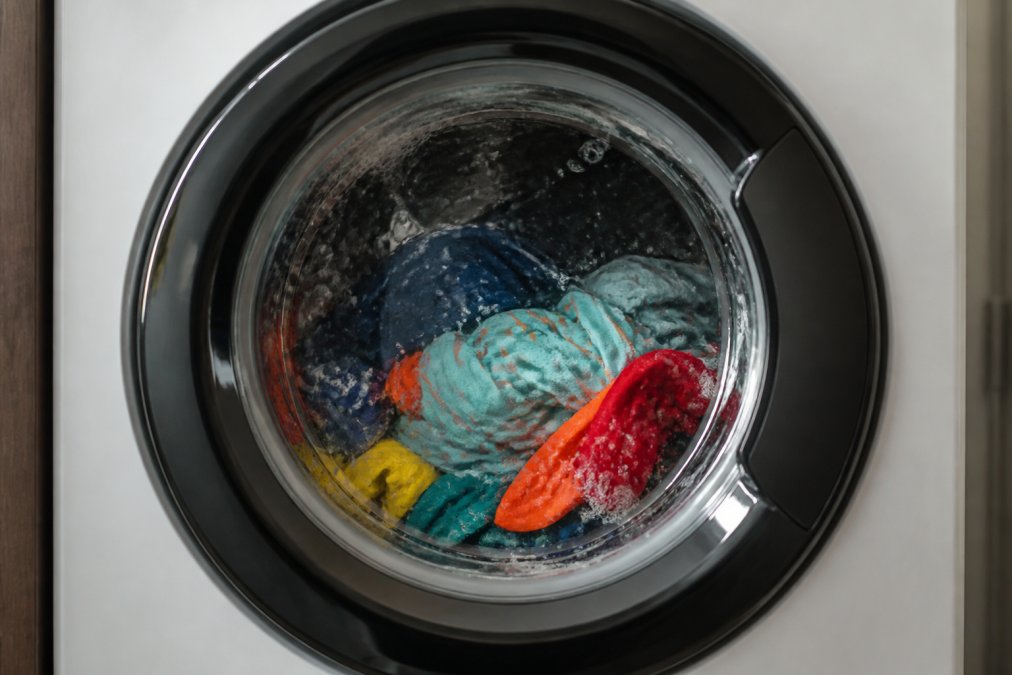
Synthetic fibers shed. Every time a polyester or acrylic garment goes through a wash cycle, it releases tiny plastic filaments into the wastewater stream. These microplastics pass through many treatment systems, accumulate in rivers and oceans, and enter the food chain. Marine animals ingest them; the particles have been found in fish, shellfish, and eventually on our plates.
Toxic Dyes and Industrial Effluent in the Supply Chain
Toxic dyes are a category of colorants that can contain heavy metals and other hazardous compounds, and they are common in low-cost textile production. When dyehouses lack proper treatment infrastructure, chemical runoff carries these substances into local water supplies. The communities living near these facilities often bear the health consequences, a pattern that environmental justice advocates have documented for years.
Textile Waste and Landfill: The Growing Pile of Discarded Clothing
Most discarded clothing doesn't get recycled. It gets buried or burned. Textile waste is one of the fastest-growing categories of municipal solid waste, and the fast fashion cycle has accelerated it: clothes are bought, worn a handful of times, and tossed. Landfill diversion programs exist, but they capture a small fraction of what's thrown away.
Why Textile Recycling Is Harder Than It Looks
The reason so little clothing gets recycled isn't laziness or lack of bins. It's materials science. Most garments are not a single fiber; they're blends. A typical kids' legging might be cotton mixed with elastane for stretch. A fleece jacket might combine polyester with a cotton lining. Those blends perform well on the body and badly in a recycling facility.
The Donation Myth
The uncomfortable takeaway is that the recycling system cannot absorb the volume the fast fashion model produces. Even a perfect recycling infrastructure would be outpaced by the rate at which new, low-quality garments enter the waste stream. That's why the most effective intervention isn't better recycling, it's buying less and wearing what you own longer.
What Actually Reduces Textile Waste
- Extend wear. Each additional year of use meaningfully lowers a garment's per-wear environmental cost, because the production impact is spread across more wears.
- Repair before replacing. A patched knee or a re-sewn seam keeps a garment out of the waste stream entirely.
- Pass down and swap. Kids outgrow clothes long before they wear them out, which makes hand-me-downs and swaps one of the highest-impact habits available to families.
- Choose single-fiber or easily recyclable fabrics when you do buy, so the garment has a chance of being recycled rather than downcycled.
- Treat donation as a last resort, not a virtue. It's better than the landfill, but it isn't recycling.
Synthetic vs. Natural Fibers: What Parents Should Know
The fiber a garment is made from shapes its entire environmental profile. Synthetic fibers like polyester and nylon are petroleum-based, shed microplastics, and resist biodegradability. Natural fibers break down more readily, but conventional cotton carries its own heavy water and chemical burden. The honest answer is that no fiber is impact-free; the goal is to choose materials that reduce harm across the garment's full lifecycle.
| Fiber Type | Source | Key Environmental Concern | Better Choice When |
|---|---|---|---|
| Polyester | Petroleum | Microplastic shedding, no biodegradability | Rarely; avoid for frequent washing |
| Conventional cotton | Cotton plant | Water scarcity, chemical runoff | Never ideal; look for organic |
| Organic cotton | Cotton plant | Lower chemical load, less water stress | Everyday kids' basics |
| Tencel (lyocell) | Wood pulp | Closed-loop processing | Durable, soft, sensitive skin |
The Benefits of Organic Cotton for Children (and the Planet)
Organic cotton is grown without synthetic pesticides or fertilizers, which reduces chemical runoff into waterways and lowers the chemical load on the people who grow and harvest it. For children, the benefits are practical as well as environmental: organic cotton is soft, breathable, and free of the residue that can irritate sensitive skin.
How to Build a Sustainable Capsule Wardrobe for Your Family
A sustainable capsule wardrobe is a small, intentional set of versatile, high-quality pieces that mix and match across seasons. The goal isn't deprivation; it's buying less and wearing more. For families, this approach cuts both the environmental footprint and the constant cycle of replacing clothes that wore out or fell out of style.
Start With a Personal Wardrobe Audit
A personal wardrobe audit is the fastest way to see what you actually own and wear. Pull everything out, sort into keep, repair, and pass-along piles, and note the gaps. Most families discover they own far more than they need and that a handful of pieces get worn constantly. That list of favorites tells you exactly what to buy more of, and what to stop buying entirely.
- Lay out every item your child owns
- Sort into keep, repair, and donate or pass down
- Note which pieces get worn weekly
- List genuine gaps (a warm layer, a good pair of pants)
- Set a rule: one in, one out
Choose Sustainable Kids Clothing Brands and Quality Materials
When you do buy, prioritize quality materials and construction over quantity. Look for organic cotton and Tencel, reinforced seams, and room to grow. This is where The Little Red Planet fits naturally: an ethically curated collection from more than 30 global designers, with expert styling guidance from founder Mindi Smith and a try-before-you-buy service called the Little Red Package that lets families test fit and feel before committing.
Avoiding the Greenwashing Trap: How to Spot Real Sustainable Fashion
Greenwashing is marketing that makes a brand look more sustainable than it is, and it's everywhere in fashion. A vague "eco-friendly" label, a single recycled-fiber capsule collection, or a leafy green logo means nothing without specifics. Real sustainable fashion comes with verifiable claims: named certifications, disclosed materials, and supply chain transparency you can actually check.
A Practical Greenwashing Checklist
Most greenwashing falls into a handful of recognizable patterns. Run any brand claim through these tests before you trust it:
- Vagueness. Words like "eco-friendly," "green," "natural," and "conscious" carry no defined meaning. Look for a specific, measurable claim instead.
- The single-hero product. One recycled-fiber line does not make a company sustainable if the rest of its catalog is conventional fast fashion.
- No proof. A real claim points to a named certification, a published materials breakdown, or a third-party audit. A logo without a standard behind it is decoration.
- Hidden trade-offs. A garment marketed as "organic cotton" may still be dyed with conventional chemicals or made in a facility with no wastewater treatment.
- Carbon-offset reliance. Buying offsets to claim "carbon neutral" doesn't reduce the emissions created by making and shipping the garment in the first place.
What Real Certifications Look Like
A credible sustainability claim usually names a standard. Common ones you'll see on children's clothing include certifications covering organic fiber content, responsible wool, or safer chemical processing. The point isn't to memorize every acronym; it's to notice whether a brand names a specific, independently verified standard or just uses aspirational language. If a brand can't tell you which standard applies and who verified it, the claim is unproven.
The Regulatory Backdrop
The Federal Trade Commission's Green Guides set the standard for how environmental marketing claims should be substantiated, and they're a useful filter for spotting vague or misleading language. The Green Guides are guidance rather than a hard ban, which is part of why greenwashing persists, enforcement depends on whether a claim crosses into outright deception.
Questions That Expose a Weak Claim
When you're standing in a store or scrolling a product page, a few direct questions cut through most marketing:
- What is this garment made of, by percentage?
- Where was it made, and can the brand name the facility?
- Which certification applies, and who verified it?
- Is the sustainability claim about the whole brand or just this one product?
Frequently Asked Questions
What are the main environmental impacts of fast fashion?
Fast fashion drives several interconnected problems: greenhouse gas emissions from production and transport, water pollution from dyeing and chemical runoff, and massive textile waste in landfills. Synthetic fibers like polyester shed microplastics into waterways with every wash, while cotton cultivation consumes enormous amounts of water. The fast fashion cycle also encourages overconsumption and planned obsolescence, where garments are designed to be replaced quickly rather than kept for years.
How does fast fashion contribute to water pollution?
Textile production uses thousands of chemicals for dyeing, finishing, and treating fabrics. These toxic dyes and industrial effluent often flow into rivers untreated in many manufacturing regions, contaminating drinking water and harming aquatic ecosystems. Cotton cultivation adds to the problem through heavy pesticide use that runs off into waterways. Choosing organic cotton reduces this chemical load significantly.
Why is textile waste a growing problem in landfills?
The average American throws away roughly 80 pounds of textiles each year, and most of it ends up in landfills rather than being recycled. Synthetic fabrics like polyester can take hundreds of years to decompose, and even natural fibers break down slowly in the oxygen-starved environment of a landfill. The fast fashion cycle accelerates this by making clothing so cheap that replacing it feels easier than repairing it.
How can parents make more sustainable clothing choices for kids?
Start with a personal wardrobe audit to see what your child actually wears, then build a sustainable capsule wardrobe around versatile, durable pieces. Look for sustainable kids clothing brands that use organic cotton or Tencel and offer supply chain transparency. Try-before-you-buy services let you test fit and fabric sensitivity before committing, which reduces returns and waste. Prioritizing garment longevity over quantity is the single most effective shift.